
You're not building a case for yourself.
Most of what runs a life runs beneath the surface. Patterns that formed early, worked, and kept running after the situation they were built for had passed. You don't experience them as patterns. You experience them as how things are. I want to walk through one of them here, not because it's the one that matters most, but because it's one I know from the inside, and because seeing it taught me something about what it takes to see any of them.
Three ways
The pattern is how a person relates their worth to their work, and "work" here means every part of a life: the company, the marriage, the body, the kids, the inner life. In current American culture there are two dominant versions of it, and most of us have lived in one or both. What I've found is that noticing our own version, without judgment, is what lets us change it on purpose instead of reacting our way back to the place we were trying to leave. A third version shows what that looks like.
The first is working to get worth. The degree, the company, the body, the family that visibly functions: all of it quietly entered as evidence in a case you're building about yourself. It produces results. It also tends to produce people who burn out, or go empty, when they notice the audition never ends. It just moves to a harder room, with more to lose. This is the one you often see in the proverbial midlife crisis. I don't think anyone chooses it. It's in the water.
The second is the correction, or maybe the reaction: worth without work. You've been told you're enough, and you believe it, or you've decided to. I think the correction is right as far as it goes. What I've watched it license is subtler. The sense of who you are and what you're capable of stays intact, and the lived life slowly stops mirroring it, because striving for something hard, suffering on purpose for something that matters, starts to feel like a betrayal of the self you've accepted. It's self-abandonment with a kind face on it.
Here's what I've noticed, in clients and in myself. The two paths are a circle. Both start at the top wanting the same thing: a meaningful life, people who love me, loving myself. One goes left and one goes right, and both tend to arrive at the same bottom, wearing different clothes. "I did everything right. Why does it feel like something's missing? I'll push a little longer." Or: "I stopped proving anything to anyone. Why does it feel like something's missing? I'll accept myself a little harder." I'm sketching both in broad strokes. The real versions are quieter and more mixed, and that's the point. The pattern survives nuance. It's hard to see precisely because it's reasonable at every step.
The third way is worth that fuels work. The worth is already true. It can't be earned, which means it can't be lost in a bad quarter or a bad year. What can be earned is its embodiment: a life that looks like what you already know about yourself. The effort doesn't stop. If anything it intensifies. It runs on different fuel, and the inside and the outside stop arguing. They become mirrors.
The vine
I grew grapes for a decade, so this is the picture I reach for.
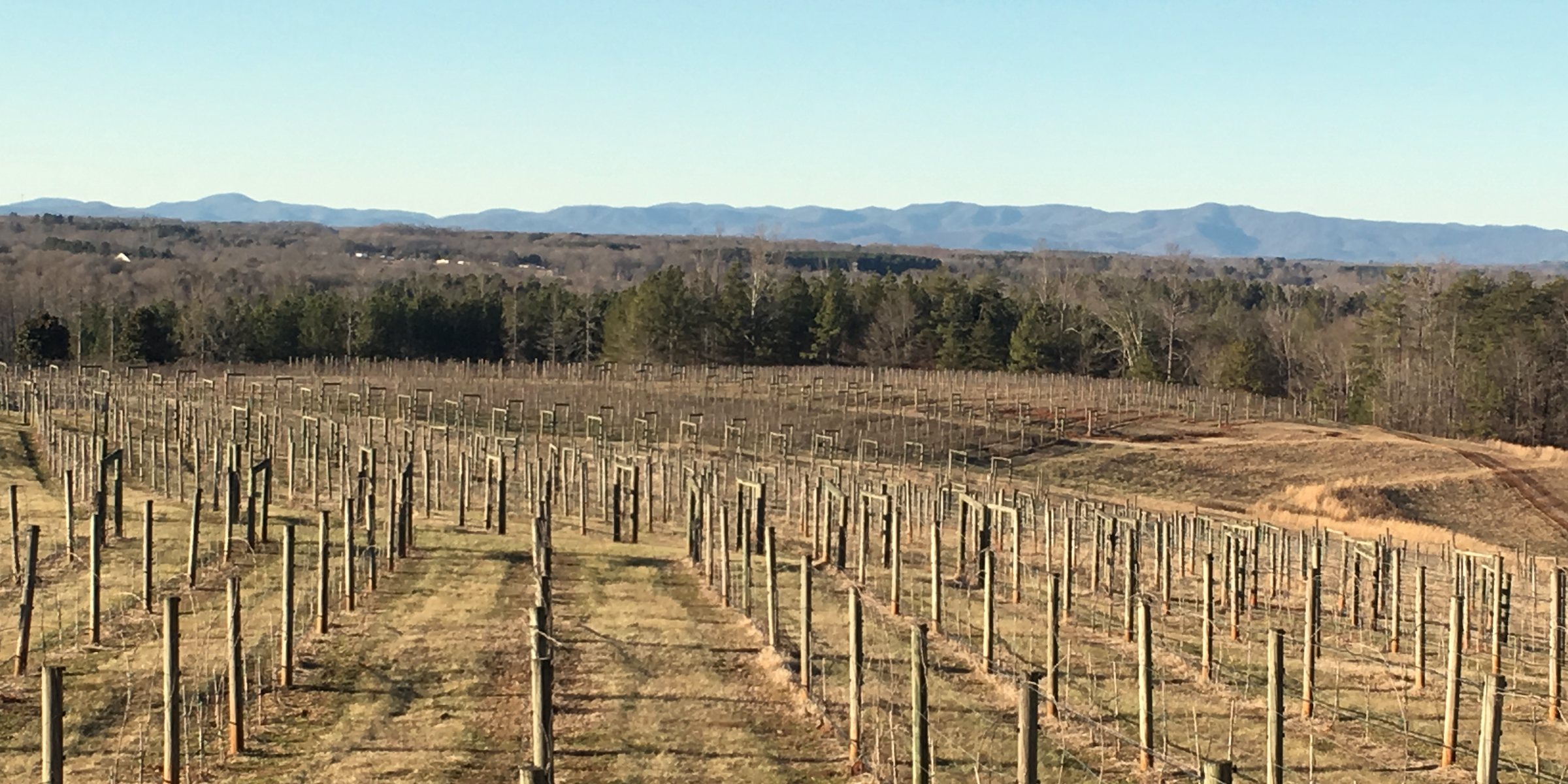
Push a vine as hard as it will go for fruit and it gives you a few heavy years, then weakens and dies early. Its value was only ever what it produced, and it produced itself to death. That's the first way.
Treasure the vine and leave it alone, no pruning, no harvest, every shoot and leaf savored as it comes, and it underproduces dramatically. The canopy chokes itself, the airflow drops, disease moves in, and each season it's a little less able to bear anything at all. That's the second.
Honor the vine and tend it on purpose. Prune what's in the way, harvest what's ripe, let it put down deep roots. It bears reliable fruit for decades, and it needs less every year: less fertilizer, less fungicide, less rescue, because the care mirrors the value and the value shows up in the care. The worth fuels the work, and the work carries the seeds of the next season. That's the third.
Nothing is on the line for the vine except being tended as if it matters. The hard decisions, the pruning, the pushing out of new growth are satisfying not because they earn the vine its worth but because they honor what was already there. The anxiety, the burnout, the hopelessness only arrive when we forget that and try to make the vine grow by force, or when we decide it's too precious to touch.
Seeing it
I don't tell you that to settle anything about worth. I tell it because of what it took to see my own version. My default is the first path, performance for safety and worth, and for years I experienced it not as a pattern but as reality. Every strategy I've described started as intelligence. Working for worth kept a younger version of me safe. Deciding I was enough kept a later version of me from collapsing. Coping is intelligence until it outlives its usefulness, and then it becomes the thing that holds you in place, usually without your knowing, because by then it isn't a strategy anymore. It's just you.
That's why self-observation matters more than almost anything else in this work. Not the sharp, auditing kind. The curious kind. What do I do when I'm afraid? What do I reach for when I feel small? Which side of the circle do I drift toward when no one is watching? The answers are rarely dramatic. They're patterns, running quietly, deciding things.
Nobody sees their own clearly from inside it. That isn't a failure; it's the reason the work exists. Insight can be relieving, even transformative, and it lasts when it's coupled with shifts that endure; each one fuels the other. If you read this and recognized a version of yourself, you've already done the first thing. You noticed. Everything else can be built from there.
Of course you're enough. Now live in full integrity with that, and fueled by it.